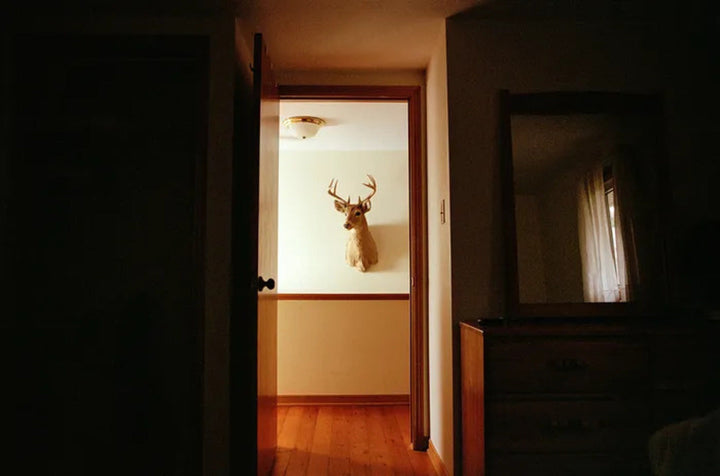
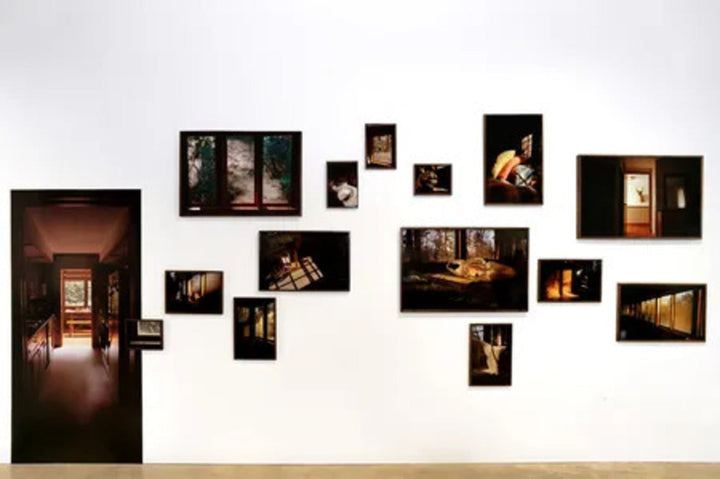
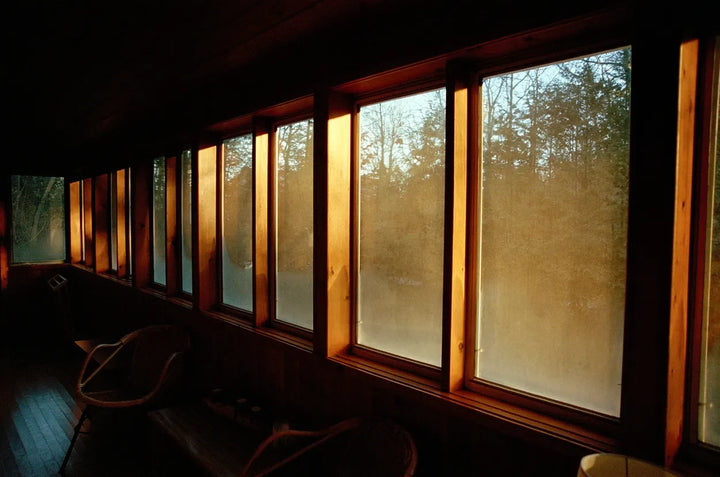
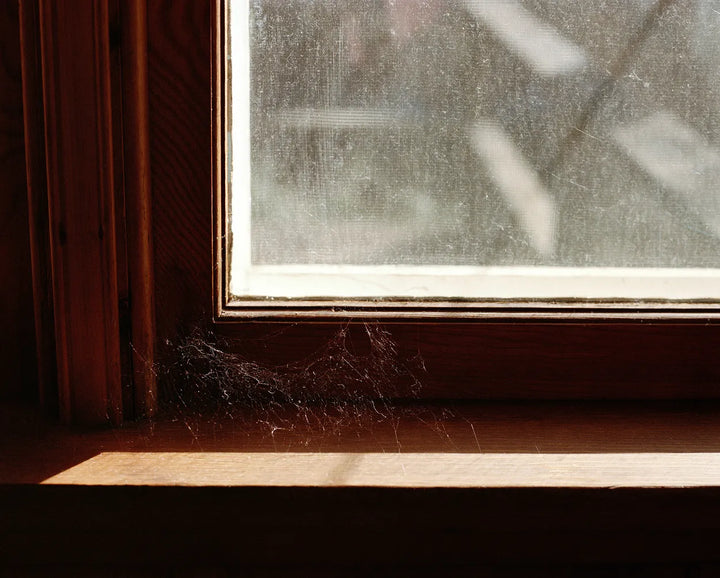
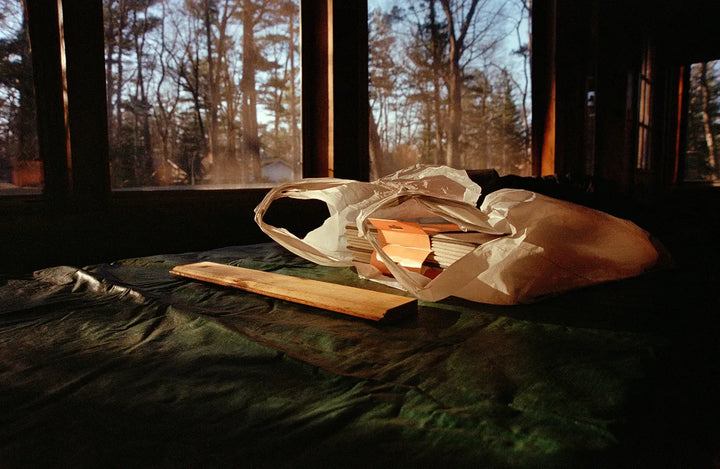
Allison Gretchko (b.1995, Chicago) is a photographer and writer whose artistic practice focuses on the transient relationship of people and place examined through themes of care, consumption, and collective memory. Focusing on the fluid and ephemeral nature of both photographic images and memory fragments as sources of fictionalized truth, her work questions the haunting and hollowness of the past through analogue photography, subconscious-driven poetry, and personal archives surrounding intimacy and inheritances. She is heavily influenced by care as a form of consumption, in relationships and domestic ecosystems. Psychogeography and intuition direct her process lending itself to snapshot aesthetics that display private moments for the public gaze and found compositions utilizing natural light as an embodiment of space, movement, and materiality. Her work has been exhibited across the United States and United Kingdom. She recently was shortlisted for New Blood Art’s Emerging Artist Prize. After nearly a decade working as an in-house commercial photographer, she completed a MFA in Arts & Humanities (2024) and an MA in Photography (2023) from the Royal College of Art and currently resides in London.
Artist statement
My practice uses photography and writing to decipher how memories are represented and entrapped in private spheres between people, place, and the psychological mindset. I am interested in looking at how the conflicting themes of care and consumption present themselves in memories and moments through examining archives of domestic inheritance, intimate relationships, and the subconscious. Using predominantly 35mm film and fragmented prose, I reflect further on the unpredictability of these tools as forms for recollection and documentation. The work often exists in the uncomfortable and emotional complexity of turning private and candid, domestic moments into forms of public display. Using analogue photography and autofictious writings to dissect memories of my own, I am fascinated by the fluidity of factuality that both memories and photographs encompass once made physical and present. This push and pull between the past and the present, lived reality and the imagined, and the thin line between documentation and manipulation are what guides my work. Our memories and and our photographs are never to be trusted as truth, despite how real we make them out to be in our minds. This haunting nostalgia, that for some may offer a moment of care, while for others, it might prove to dangerously consume them, is ever present throughout my images. Operating in this friction informs what I choose to capture and the accessibility and context, or lack thereof, that is allocated to my viewer.
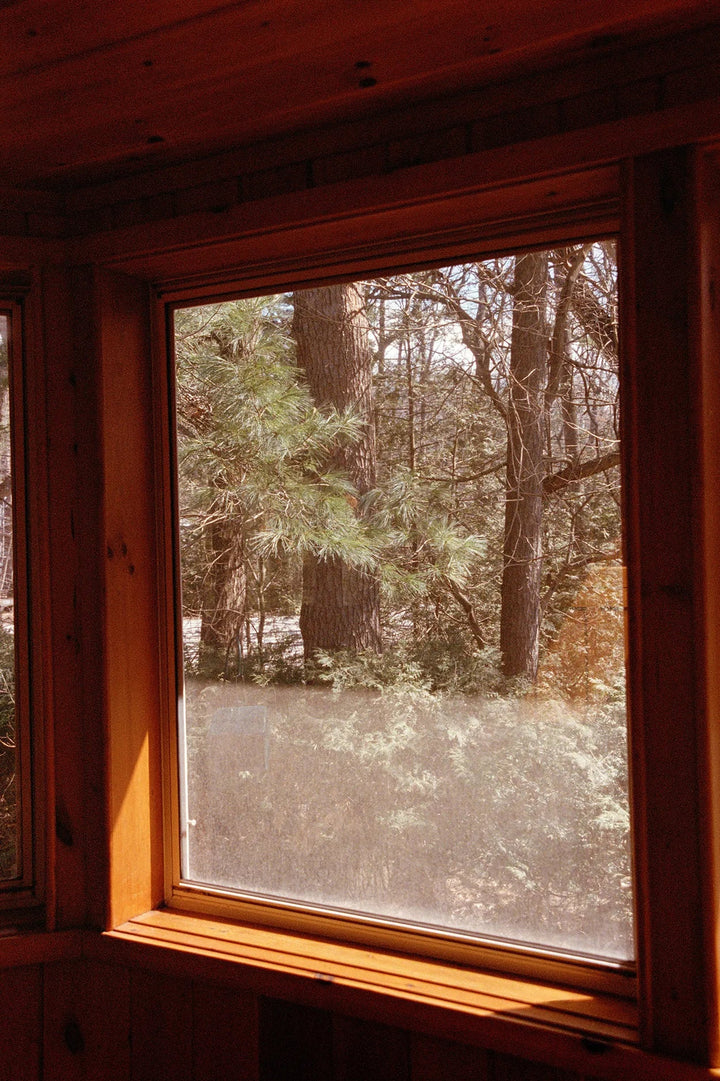
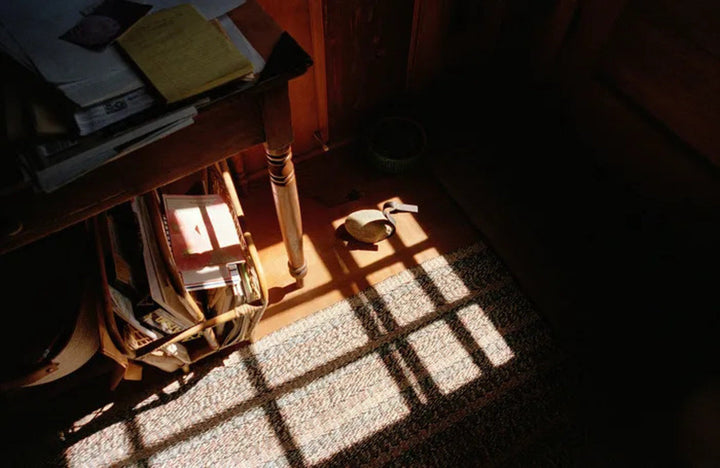
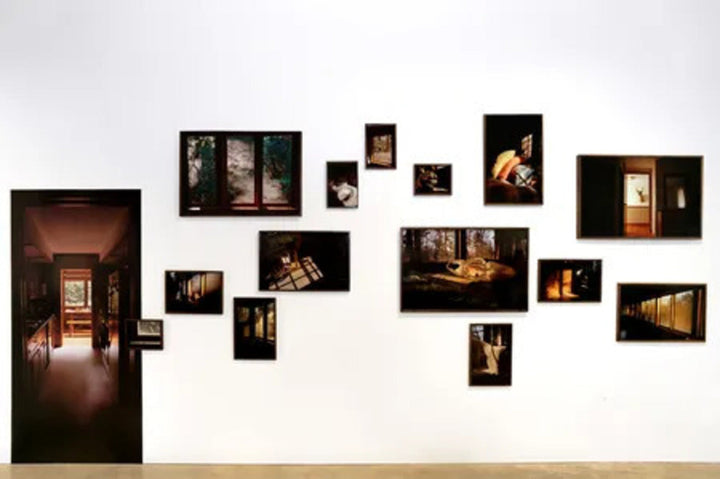
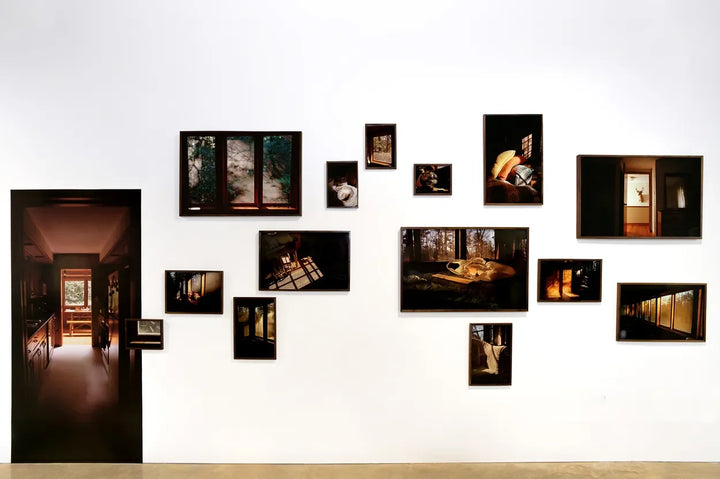
My work is guided by intuition, psychogeography, and the following of natural light as a decisionmaker with an emphasis on allowing light and emotion to act as their own embodiments of space, movement, and materiality. My images are never staged, only found by chance, but the lack of candidness found in composition exposes their vulnerabilities as objects of truth, similar to how memories can never be fully factual. Open interpretation depending on the context, time, history, and lived experience of the viewer is a driver behind my making process and informs every series. Currently, I am exploring these ideologies within the ecosystems of domesticity. Continuing to create more chapters and expand upon my most recent series, Who drinks your tears?, to include installation builds and a photobook.